Food factories already contain enormous amounts of knowledge
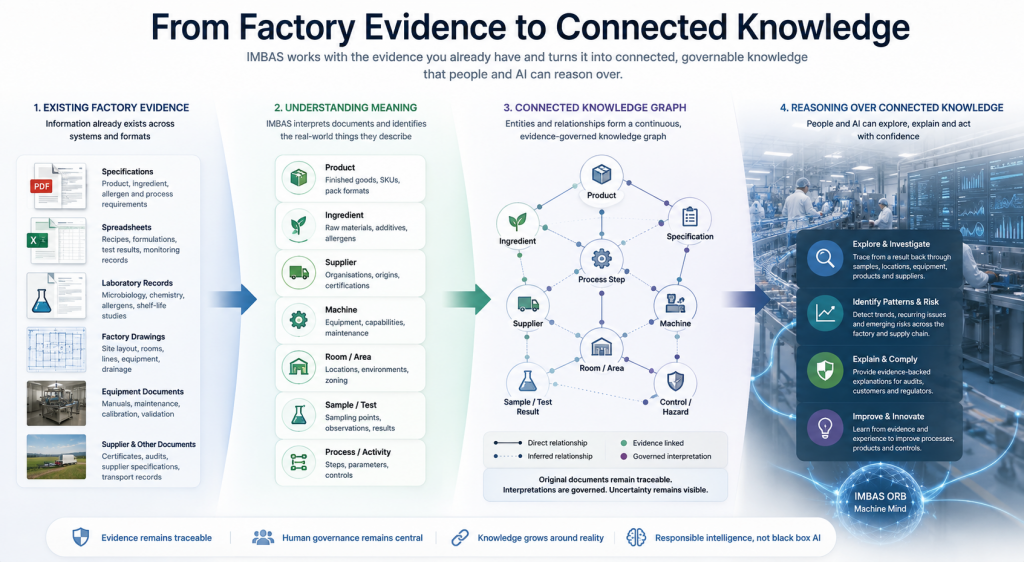
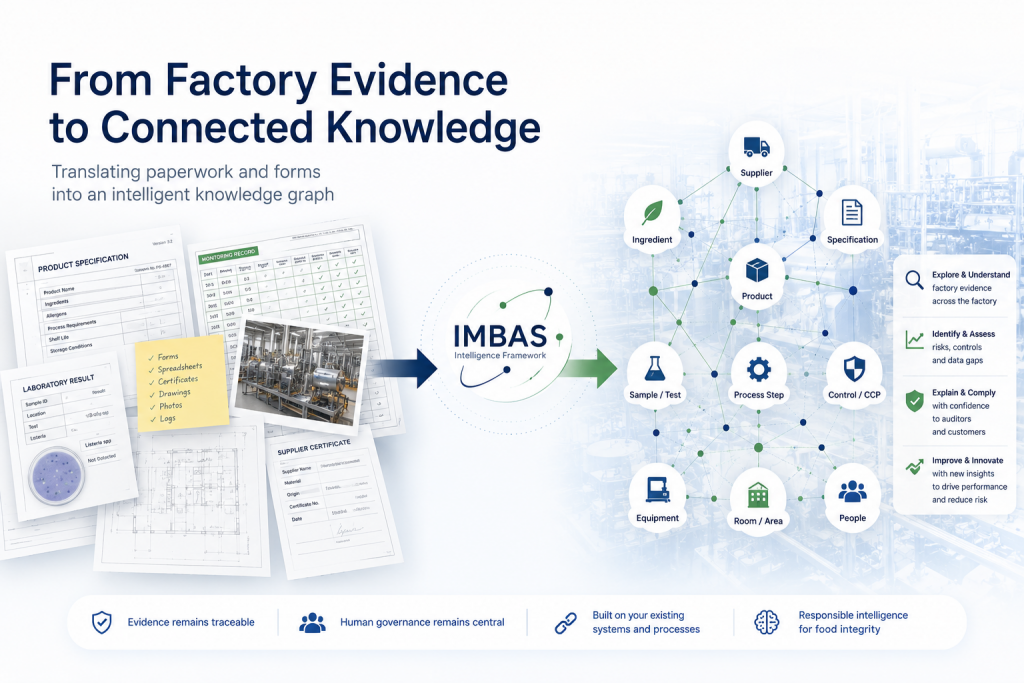
It exists in specifications, spreadsheets, laboratory systems, factory drawings, recipes, equipment documentation, supplier records, audits, photographs, monitoring data and the experience of the people who operate the site.
The problem is rarely that the knowledge does not exist.
The problem is that it exists in different places, in different formats, created for different purposes.
IMBAS starts with the evidence you already have
IMBAS is designed to work with existing factory information rather than requiring an organisation to first rebuild everything inside a new system.
A factory drawing can describe rooms, production lines and equipment.
A specification can describe a product, its ingredients, allergens and process requirements.
A laboratory record can describe a sample, where it was taken, when it was taken and what was detected.
A supplier document can describe a material, its origin and the controls associated with it.
Each document contains pieces of the same operational reality.
IMBAS progressively connects them.
Understanding what documents mean
Finding a document is useful.
Understanding what it represents is much more powerful.
IMBAS examines evidence in context and identifies the real-world subjects described within it — products, ingredients, suppliers, machines, rooms, processes, samples, hazards, controls, people and events.
The original evidence remains traceable.
Interpretations remain distinguishable from accepted organisational knowledge.
Uncertainty remains visible.
This allows information from very different systems to contribute to a shared understanding without losing its provenance.
A Continuous Knowledge Graph